
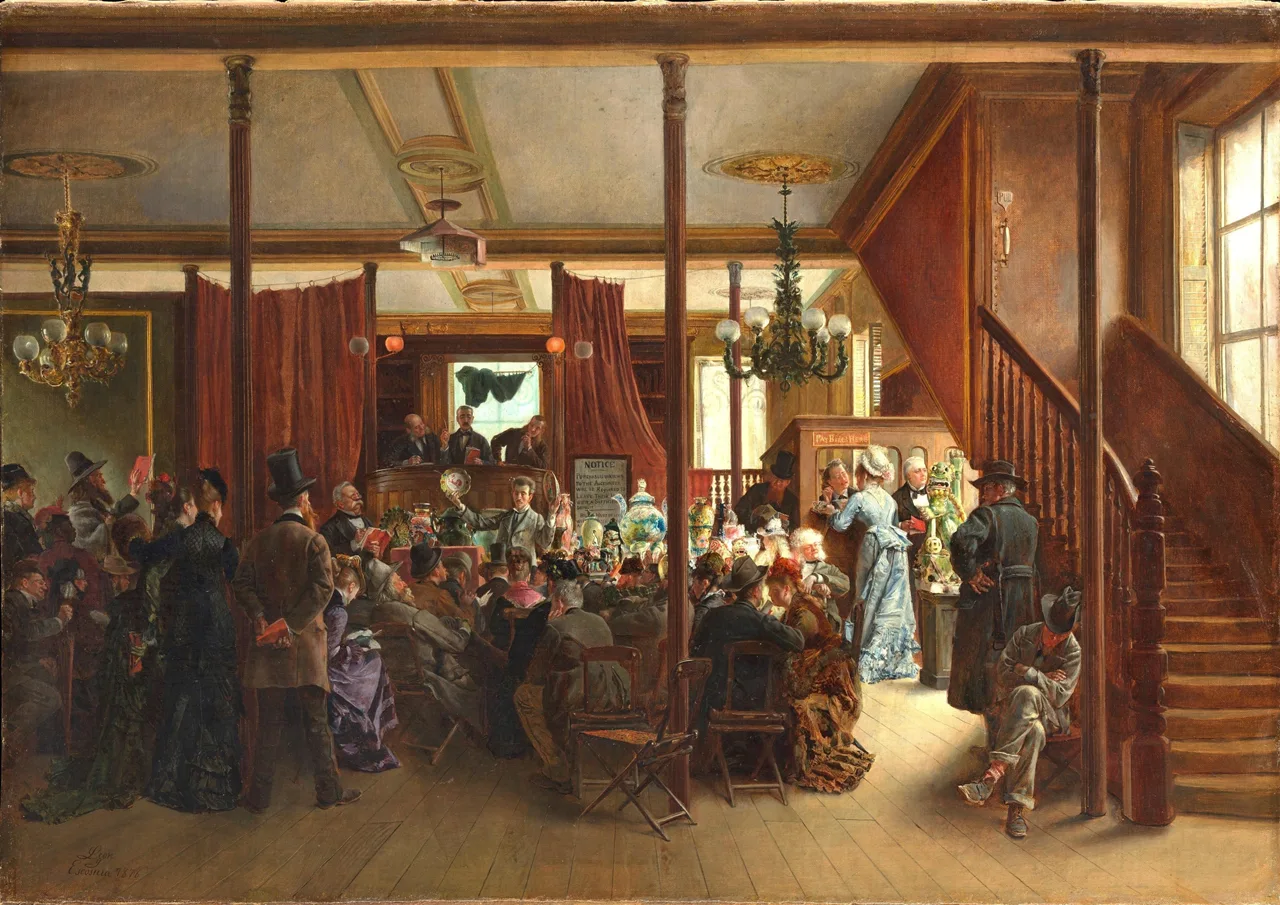
The Changing World of the Antique Auction
For generations, the great London auction houses occupied a central position in the British antiques trade. Today, however, an increasing number of important collections are finding their way into smaller regional salerooms.
A recent example is the dispersal of the collection of British auctioneer Patrick Lindsay. Rather than sending the entire collection to one of London’s major houses, much of it was offered through Dreweatts, while a smaller group of particularly important works was handled by Christie’s. The result reflects a broader shift in the way major collections are being brought to market.
The change has been encouraged by the rise of online auctions. A regional auction house can now reach international collectors without requiring every potential buyer to travel to London. At the same time, smaller salerooms can devote considerable attention to the history and presentation of an individual collection.
This has created an interesting situation for collectors. The most important object in a sale is not necessarily found under the most prestigious auction-house name. Specialist knowledge, careful cataloguing and good provenance can matter considerably more.
The presentation of an object has also become increasingly important. Auction houses are recreating the atmosphere of historic interiors and presenting objects as parts of a larger story rather than simply as isolated lots. Collectors are increasingly buying not only an object, but an understanding of where it came from and why it matters.
This is particularly relevant to objects from the 18th and 19th centuries. A sword or pistol, for example, can be technically interesting in its own right, but its significance can increase enormously when its manufacture, ownership and historical context can be established.
The modern antiques market may be increasingly digital, but the fundamental attraction remains remarkably traditional: the discovery of something with a story.
And sometimes the most interesting discoveries are not found where one expects them.