Discoveries
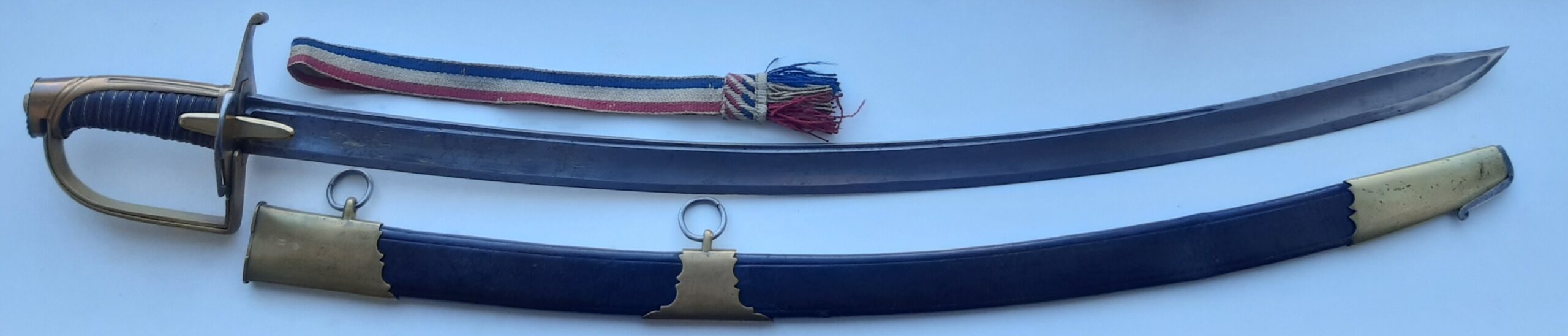
Sabre of a Batavian infantry officer
by Marc Marbot
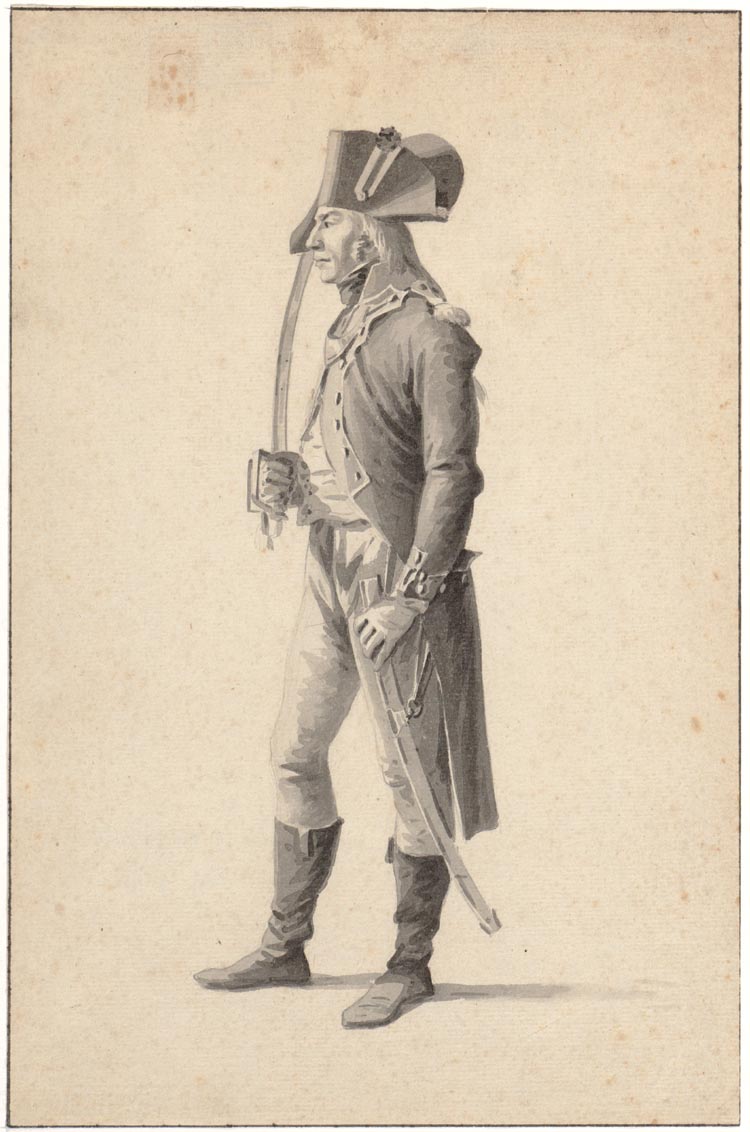
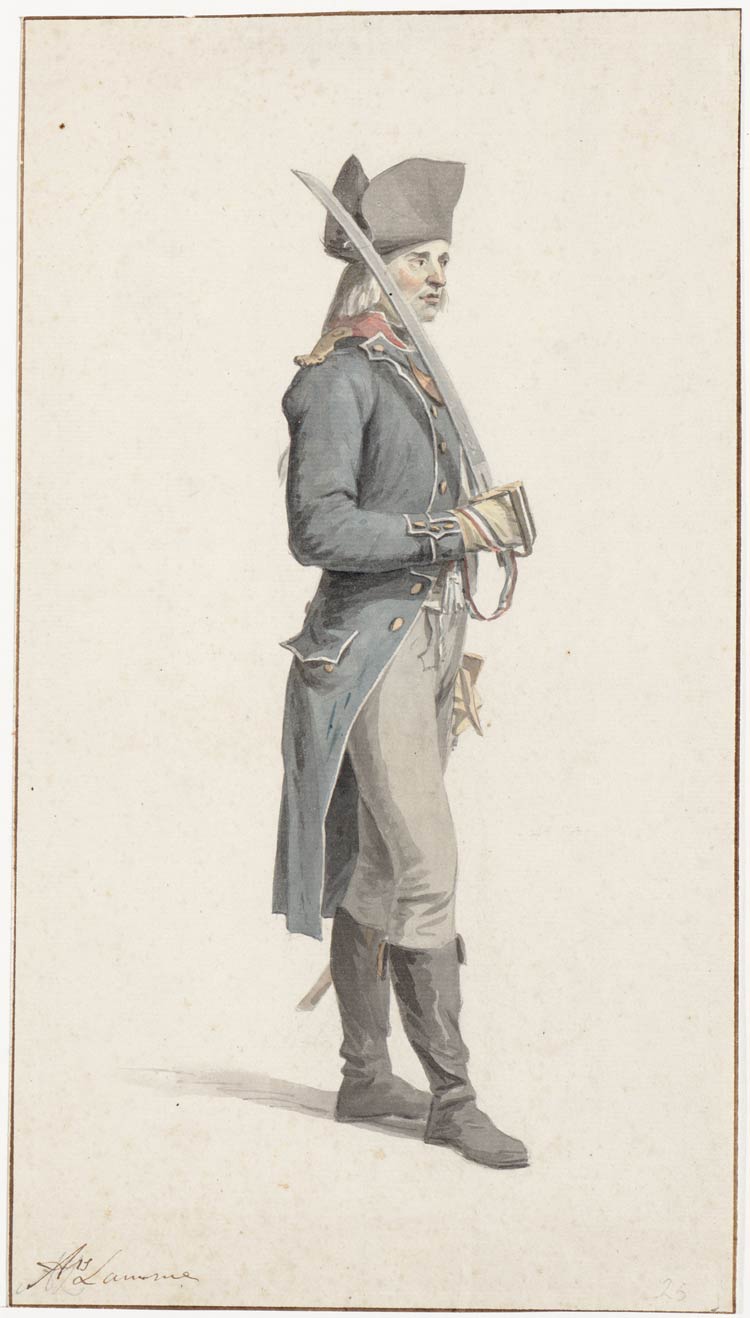
In the collection of the National Military Museum, several prints drawn by Arnoldus Lamme can be found (1795-1806; object numbers 00013200, 00013210 and 00108007).
Several drawings depict a Batavian infantry officer from different angles. He is holding his sabre in his hands.
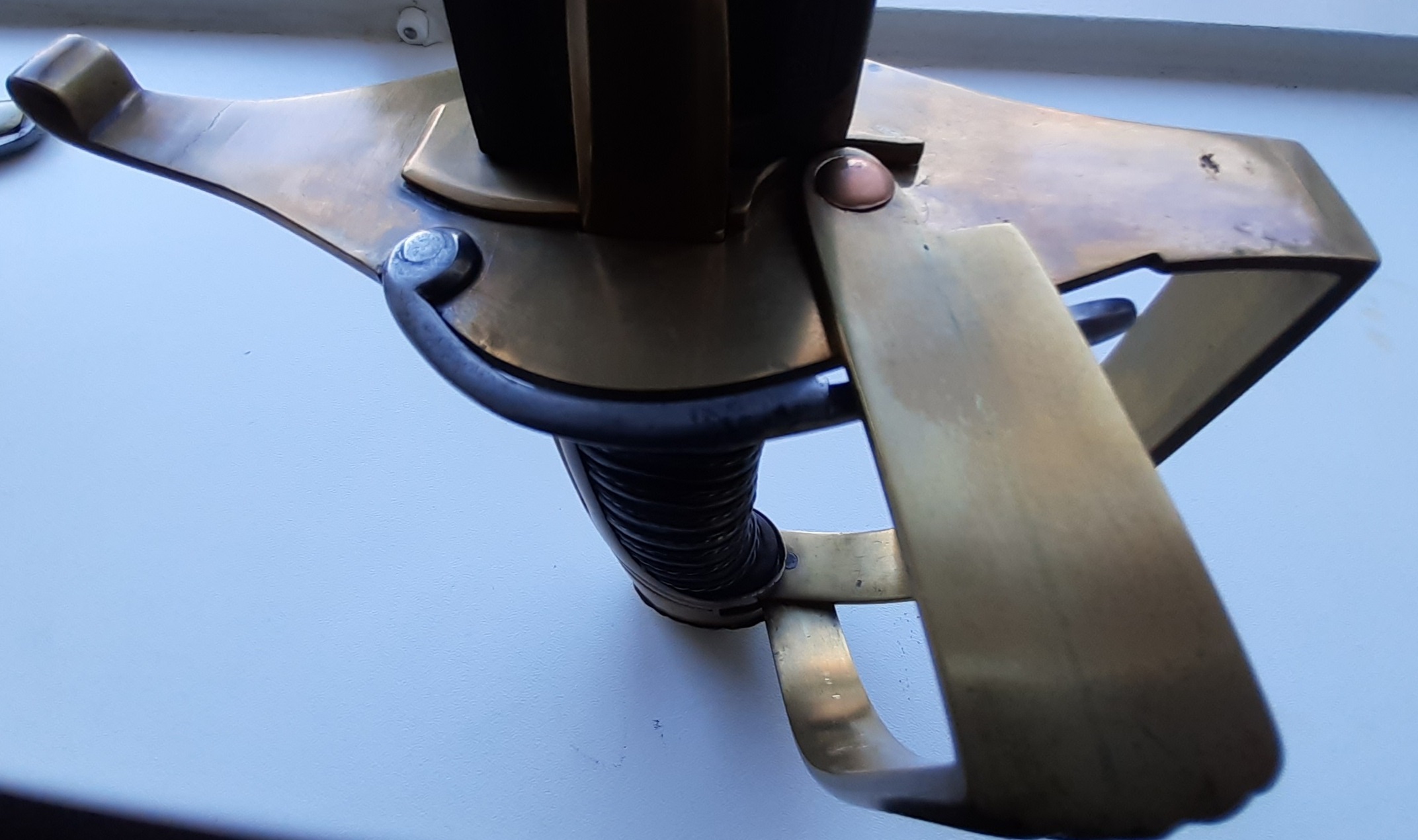
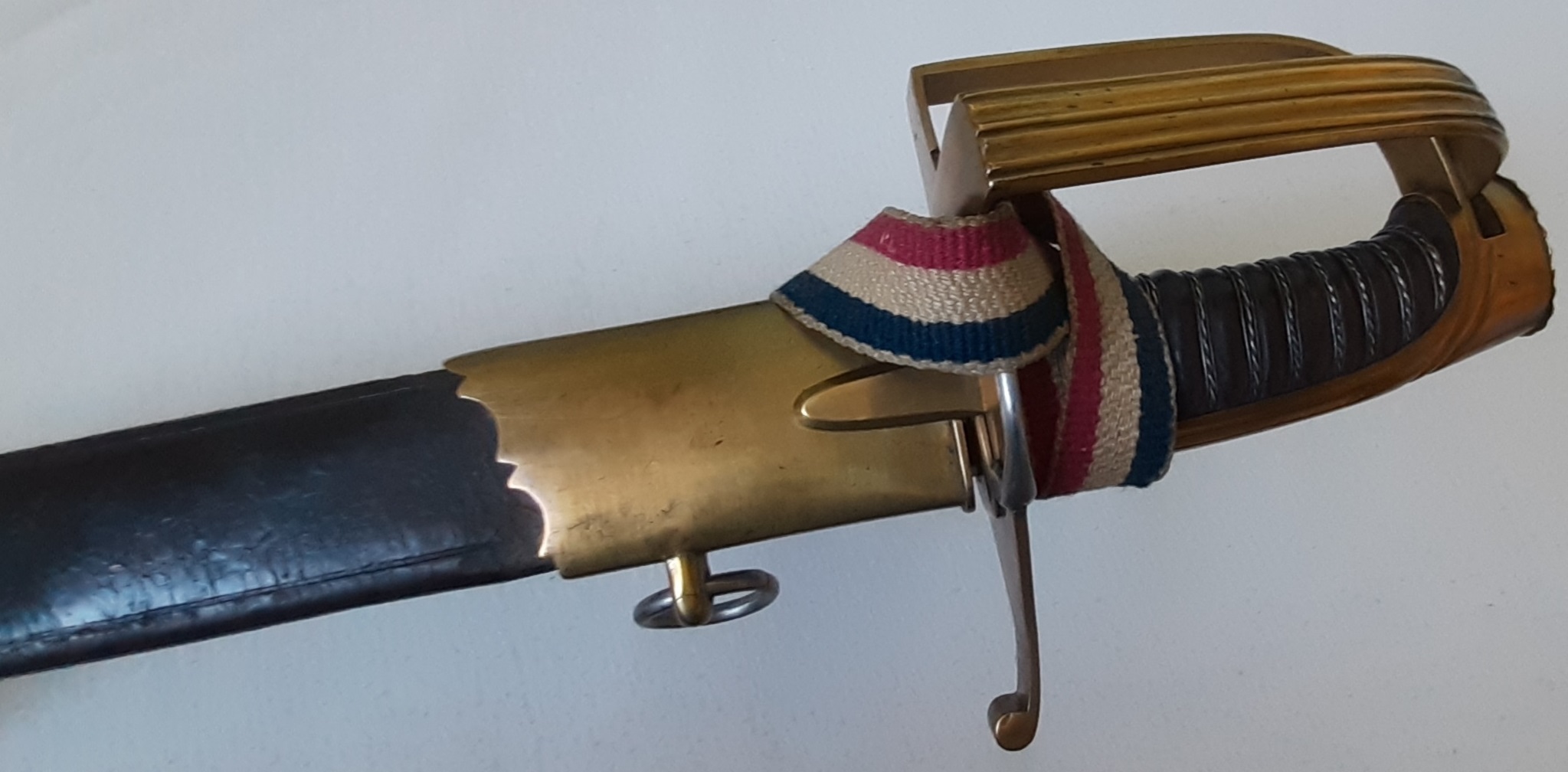
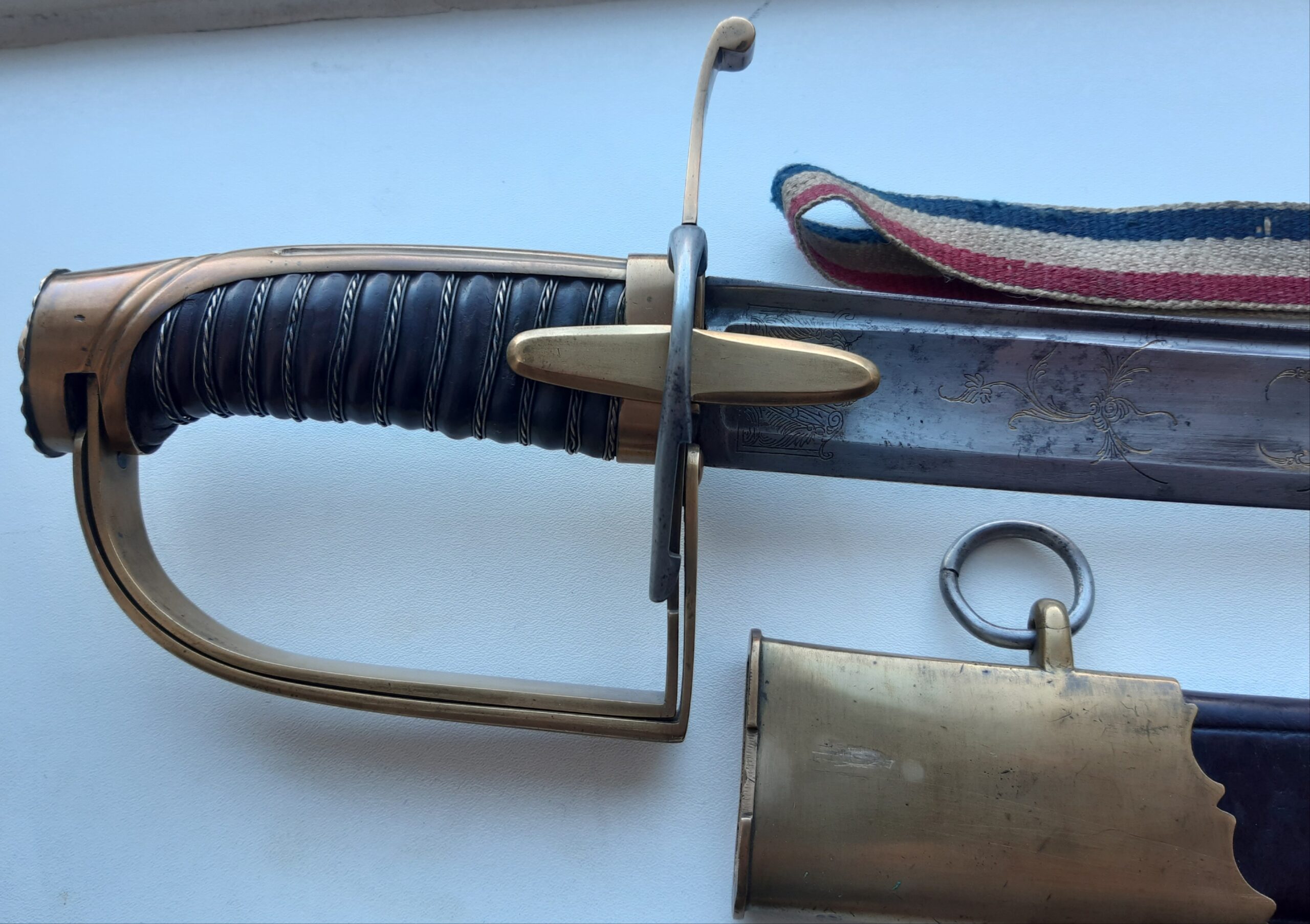
The coloured print of this officer clearly shows that his sabre has a so-called folding guard. This is a type of hilt in which a second bar slides beneath or above the main knuckle bow. When not in use, this second bar remains closed. If the user wanted additional protection, he could move it so that it extended from the grip, providing extra protection for the hand by deflecting a blow from an enemy’s cutting weapon.
Attached at the bottom by a metal pin and a type of spring, this additional bar could move. In Arnoldus Lamme’s illustrations, the bar pivots on the inside. In this article, I will also present an example from the same period in which the movable bar pivots on the outside.
The prints also show that the officer’s sabre is fitted with a sword knot in the familiar red, white and blue colours. An example of this type of sword knot can also be found in the collection of the National Military Museum (including object number 092410).
In my article on Batavian general officers, I briefly described the development of blade lengths and, among other things, the use of brass scabbard mounts. Further information can be found in Wapenfeiten, No. 2, 2011.
For an attractive print of an officer in action, see the illustration in Ten Raa depicting the 5th Demi-Brigade of Infantry and the 1st Battalion of Rifles (1799; NMM 00009098/001).
The sabre was used during the Batavian era, including the period of the Batavian Commonwealth. During the reign of Louis Napoleon, in the period known as the Kingdom of Holland, fashions changed and this type of hilt was superseded by other models.
View All Images